
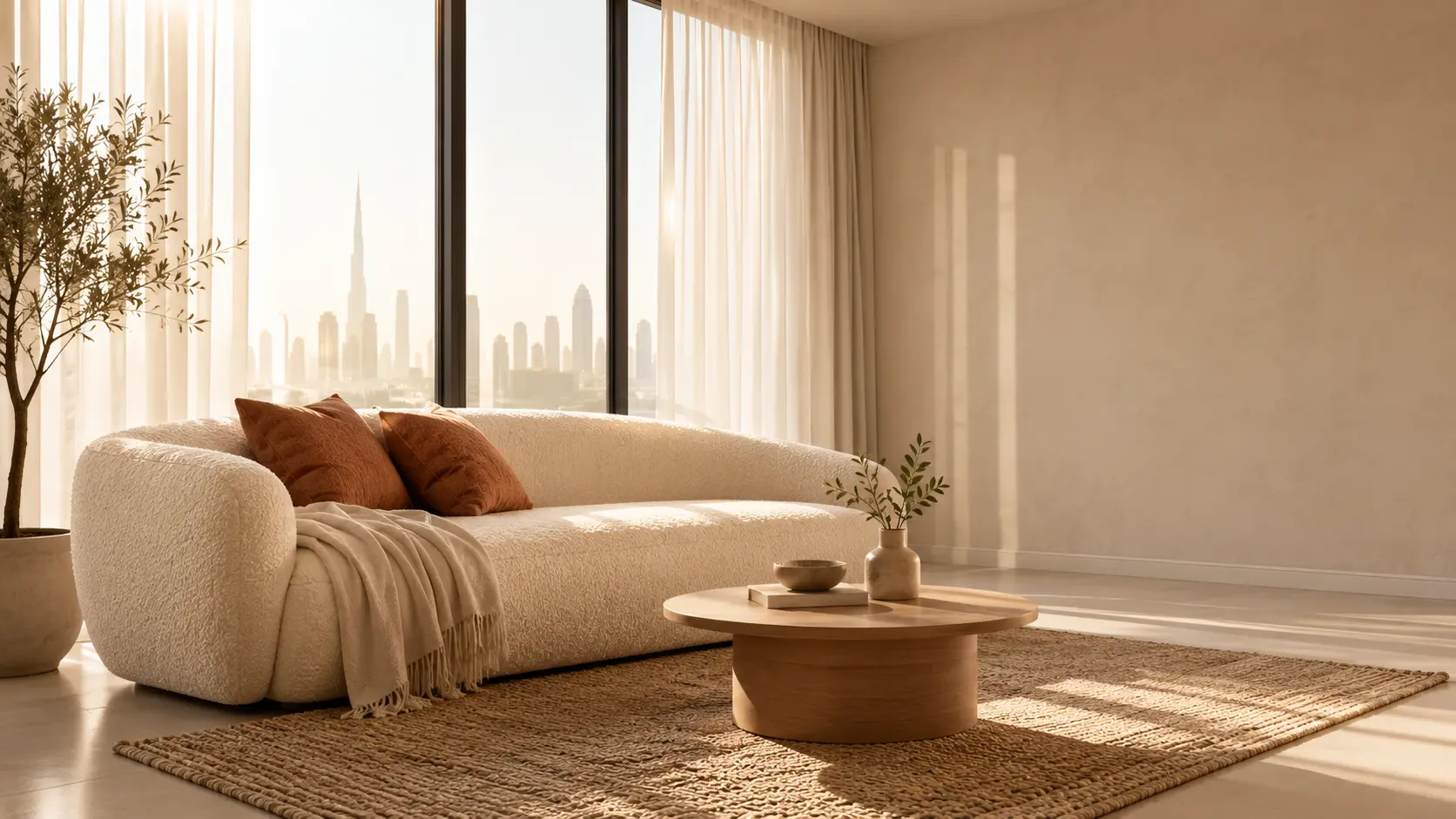
Dubai’s strong sun, extreme summer heat, and changing humidity can slowly damage even the best sofa. Colours fade, leather dries out, cushions lose their shape, and metal legs start to rust if they are not looked after. The good news is that a few simple habits can keep your sofa looking fresh for years. At Dubai Sofa, we have been helping homeowners with custom sofas in Dubai for more than 20 years. In this guide, we share easy tips, the best fabrics, and a simple care routine to protect your sofa.
How Dubai’s Climate Damages Your Sofa
Dubai’s climate puts your sofa under stress every single day. Sun and UV rays are the biggest problem, as they fade colours and weaken fabric fibers, especially near windows and balcony doors. Heat dries out leather, tires the foam inside the cushions, and can loosen parts of the frame over time. Humidity is strongest in summer and in outdoor or poorly ventilated spaces, where it can cause mildew, bad smells, and rust on metal legs. At the same time, constant air conditioning can dry out some materials indoors. Lastly, dust and sand settle into the fabric and seams, and this fine grit slowly wears down the surface with daily use. Together, these factors can age a sofa much faster than you expect.
Signs Your Sofa Is Suffering From Heat And Sun Damage
Heat and sun damage often starts slowly, so it is easy to miss. The first sign is uneven colour, where the side facing the window looks lighter than the rest of the sofa. On leather sofas, look for dry, stiff, or cracked patches, especially on the arms and seat. If your cushions look flat or lumpy and don’t bounce back after sitting, the foam may be wearing out. A musty smell or small dark spots show that moisture is building up, while rust on metal legs or handles is a clear warning on outdoor and balcony sofas. Fabric that feels rough, thin, or frayed is another sign. If you notice two or more of these, it is time to move your sofa and start a regular care routine.
10 Easy Ways To Protect Your Sofa In Dubai
You don’t need expensive treatments to keep your sofa in good shape. These 10 simple habits will protect it from Dubai’s sun, heat, and humidity, and help it last much longer.
1. Move Your Sofa Away From Direct Sunlight
Direct sunlight is the fastest way to fade a sofa. If your sofa sits right next to a window or balcony door, try moving it a few feet away or place it against a wall that gets less sun. Even a small change in position can reduce UV exposure and keep the colour even across the whole sofa.
2. Use Curtains, Blinds Or UV Window Film
If you cannot move your sofa, block the sun instead. Sheer curtains, blinds, and UV window film let in natural light while cutting down harsh rays. Keep them closed during the peak afternoon hours, especially in summer, when the sun is strongest. This protects your sofa and also helps keep the room cooler.
3. Rotate And Flip Cushions Regularly
Cushions that stay in the same position wear unevenly. If your sofa allows it, rotate and flip the seat and back cushions every one to two weeks, so that sun exposure and daily use are shared equally. This stops the foam from sinking in one spot and helps your sofa keep its shape and colour.
4. Balance Indoor Temperature And Humidity
Constant cold air and sudden temperature changes can dry out leather and fabric. Avoid placing your sofa directly in front of AC vents, and keep your room at a steady, comfortable temperature. If your home feels damp, especially in summer, a dehumidifier can help control moisture and prevent musty smells.
5. Vacuum And Dust Often
Dubai’s fine dust and sand settle into fabric and seams quickly. This grit acts like sandpaper and wears down the surface over time. Vacuum your sofa once a week using a soft brush attachment, and don’t forget the gaps under and between the cushions. Wipe leather and wooden parts with a soft, dry cloth.
6. Clean Spills Immediately
Spills that sit on the fabric can turn into permanent stains, and heat makes them set faster. Blot the spill right away with a clean, dry cloth instead of rubbing it. Then clean the area gently with a mild solution. For step-by-step methods, read our guide on how to clean a sofa at home.
7. Use Throws And Covers
Throws and covers are an easy way to protect high-use areas like the seat and armrests. They take the sun, spills, and daily wear instead of your sofa, and you can wash or replace them whenever needed. Browse our sofa covers and sofa throws and blankets, collection or read our tips on how to use a throw on a sofa.
8. Condition Leather And Treat Fabric Properly
Leather needs regular care to stay soft, so wipe it clean and apply a leather conditioner every few months. For fabric sofas, use a fabric protector spray, or choose upholstery with a stain-resistant finish. Always test any product on a small, hidden area first to make sure it doesn’t change the colour.
9. Protect Outdoor And Balcony Sofas
Outdoor sofas face the harshest conditions, so they need extra care. Cover them when they are not in use, and store the cushions indoors during storms or very humid weather. Choose sofas with UV-resistant fabric and rust-resistant frames. Our outdoor sofa collection is made with weather-resistant materials for Dubai’s balconies, gardens, and poolsides.
10. Ventilate The Room And Keep Cushions Dry
Trapped moisture leads to mildew and bad smells. Open windows or run the exhaust fans in humid weather to keep the room well ventilated. If your cushions get damp, let them dry completely in a shaded, airy place before putting them back. Never dry them under direct sun, as this can fade the fabric.
Best Sofa Fabrics For Dubai’s Climate
The fabric you choose has a big impact on how well your sofa handles Dubai’s sun, heat, and humidity. Some fabrics fade quickly near windows, while others stay fresh and colourful for years. The best choices are fabrics that resist fading, feel comfortable in warm weather, and are easy to clean. Look for tightly woven, high-quality upholstery with a high Martindale rating, as this shows how well the fabric handles daily wear. At Dubai Sofa, our fabrics are rated above 30,000 rubs, so they stay strong and good-looking for a long time. Here is how the most popular fabrics perform in Dubai’s climate:


